Plastics Resources Circular Treatment
Share to Line Share to Facebook Share to X Print ContentTaiwan's annual demand for plastic resources is approximately 13 million metric tons, with around 3.41 million metric tons consumed domestically. Post-consumer plastic products are primarily recovered through material recycling and energy recovery; material recycling and reuse account for an estimated 1.04 million metric tons, representing a recycling rate of about 40%. The remaining waste plastics amount to approximately 1.621 million metric tons, of which around 1.535 million metric tons undergo energy recovery.
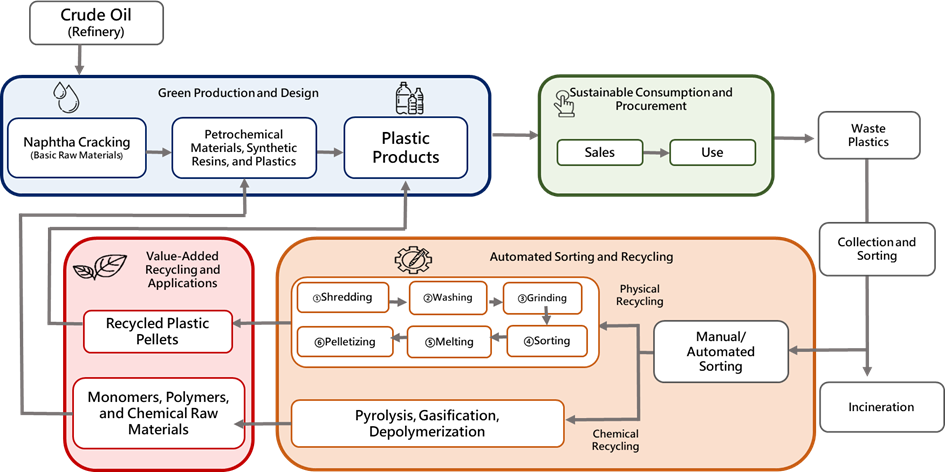
To advance the circularity of plastics, the Resource Circulation Administration implements four key lifecycle-based strategies: promoting source restriction, bans, and reuse to reduce single-use plastic consumption; adopting green design and introducing smart sorting to enhance product recyclability and sorting efficiency; advancing physical and chemical recycling technologies while expanding the application of recycled materials to replace virgin plastics; and connecting industry, government, and academia while aligning with international standards to reduce environmental leakage, minimize resource consumption, and maximize material value.
- Source:
- Ministry of Environment
- Published:
- 2023-08-09
- Updated:
- 2026-10-05
