Smart enforcement by the EMA uncovers Taiwan’s first environmental crime case involving excessive emissions of toxic toluene waste gas
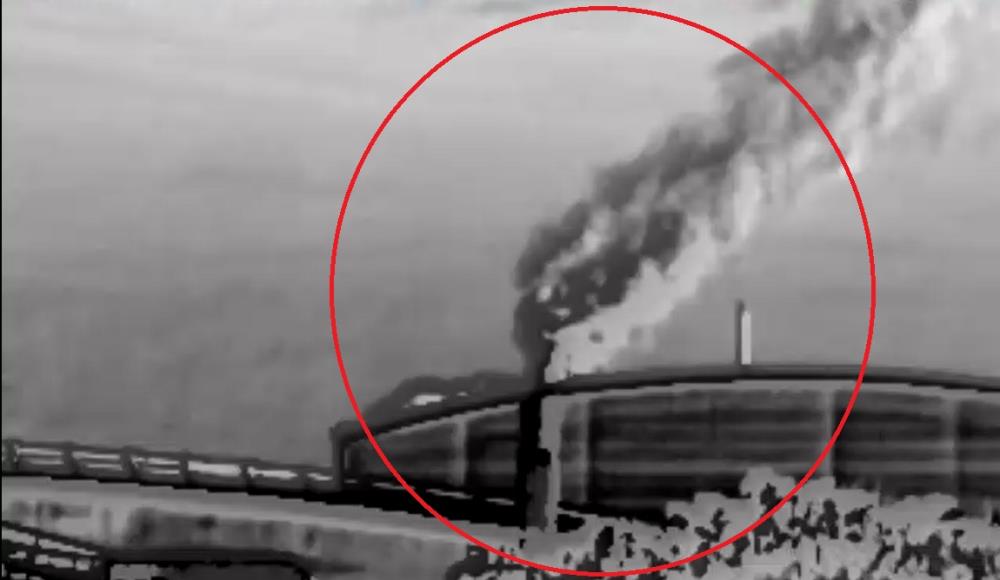
Share to Line Share to Facebook Share to X Print ContentThe Central Center of Environmental Management, Environmental Management Administration (EMA) under the Ministry of Environment (MOENV) utilized air quality sensor IoT big data and analysis of enterprise environmental reporting data to identify a PU synthetic leather manufacturer in the Changhua Coastal Industrial Park suspected of improper emissions of volatile organic waste gases and evasion of air pollution control fees. After reporting the case to the Changhua District Prosecutors Office for investigation, authorities found that, in addition to deliberately evading air pollution control fees, the business’ exhaust emissions contained the hazardous air pollutant toluene at concentrations 24 times higher than the regulatory emission standard. In addition to administrative penalties under the Air Pollution Control Act and recovery of the evaded air pollution control fees, the false applications, false declarations, and discharging waste gas with toluene concentrations exceeding emission limits constitute criminal liability under the Air Pollution Control Act and are currently under investigation by the Changhua District Prosecutors Office.
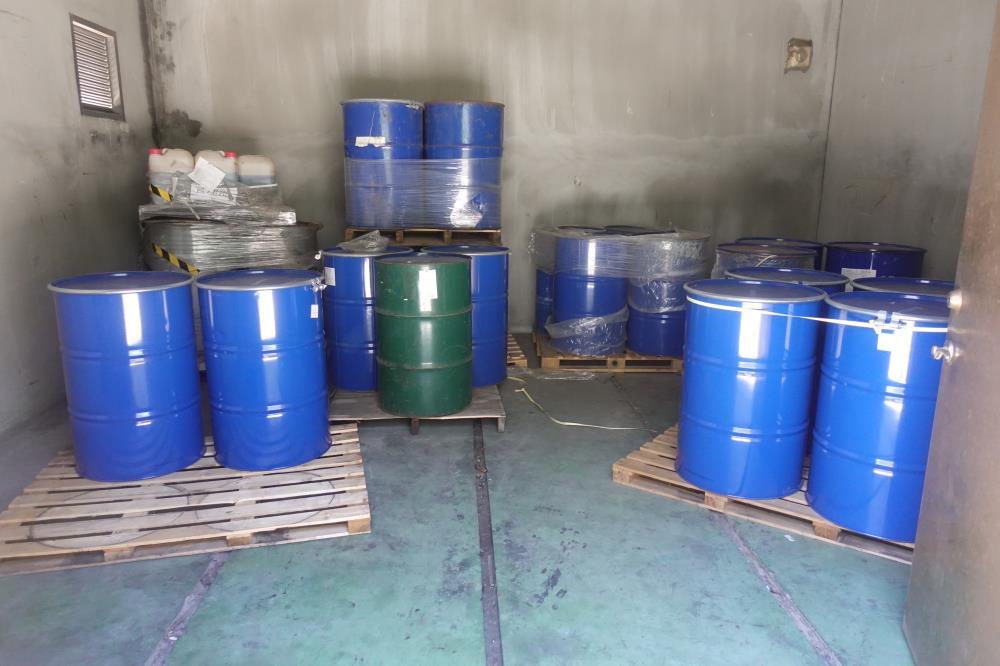
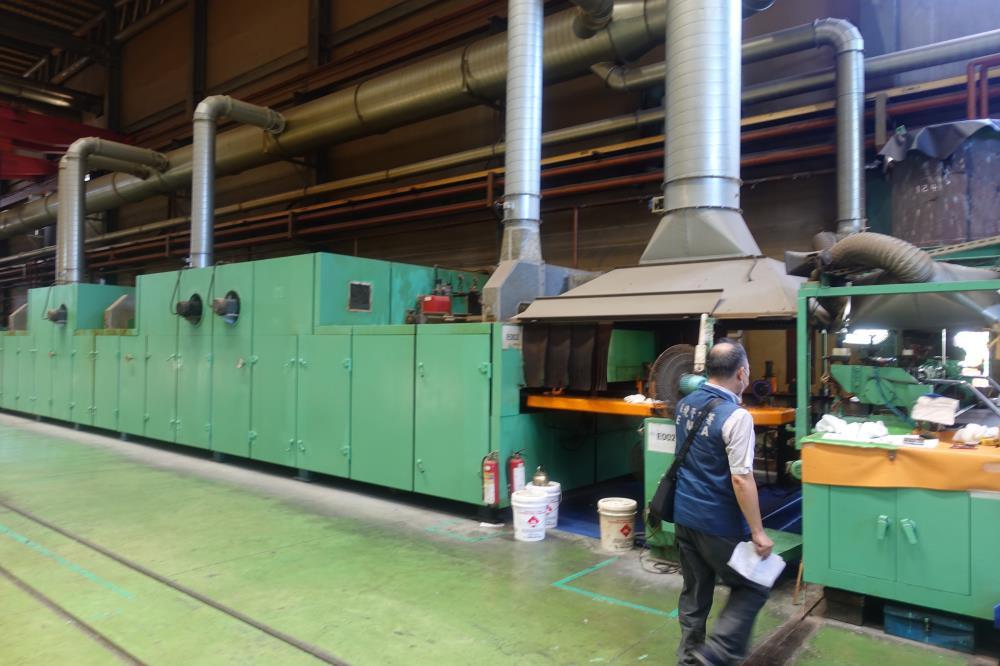
This case was investigated under the direction of Chief Prosecutor Chou Pei-ying and Prosecutor Cheng Yu-fen of the Land Affairs Division of the Changhua District Prosecutors Office, with enforcement carried out by the Aviation and Maritime Investigation Office of the Ministry of Justice Investigation Bureau and the Central Region Unit of the Third Brigade of the Seventh Special Police Corps, National Police Agency. Related administrative inspections were conducted by the EMA Central Center of Environmental Management and the Changhua County Environmental Protection Bureau. A joint prosecutor-environmental authority-police law enforcement operation was launched in June 2025. Investigators found that, in applying for a stationary pollution source operating permit, the business intentionally stated that its production process used water-based environmentally friendly resin coatings, when in fact it used resin coatings containing large amounts of volatile organic compounds such as toluene and methyl ethyl ketone. Meanwhile, it underreported raw material usage to evade air pollution control fees. Subsequently, the Changhua County Environmental Protection Bureau will recover air pollution control fees evaded by the business over the past five years. The aforementioned false application and declaration of air pollution control fees constitute criminal liability under Article 54 of the Air Pollution Control Act.
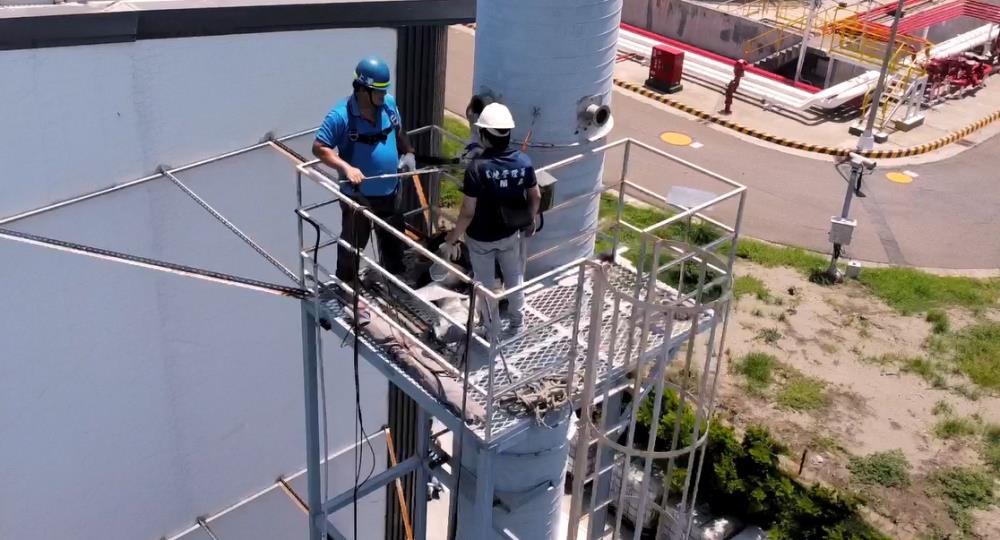
During the law enforcement operation, exhaust from the business’ emission stacks was simultaneously sampled and tested for toluene concentration. The results exceeded the emission standard by as much as 24 times. As toluene is a hazardous air pollutant, the measured concentration also exceeded the emission limit, making this Taiwan’s first case in which business was found to have discharged a hazardous air pollutant exceeding emission limits, constituting criminal liability under Article 53 of the Air Pollution Control Act.
Toluene is a hazardous air pollutant. Acute inhalation can irritate the eyes and respiratory tract and cause dizziness, headaches, and nausea; high concentrations may lead to confusion or even death. Long-term exposure can damage the central nervous system, resulting in memory impairment and poor coordination, and may also harm the liver, kidneys, and hearing. To deter unscrupulous operators from discharging hazardous air pollutants, the MOENV has, since 2019, successively announced the “Categories and Emission Limits of Hazardous Air Pollutants from Stationary Pollution Sources.” Pursuant to Article 53 of the Air Pollution Control Act, where emissions of hazardous air pollutants from discharge outlets exceed emission limits and are sufficient to cause harm to others’ life or physical health, offenders face imprisonment of up to seven years and may also be fined between NT$1 million and NT$15 million.
The EMA urges businesses to properly operate all air pollution control equipment. The administration will continue working with environmental protection bureaus and departments across counties and cities to strengthen controls on stationary sources of air pollution to safeguard air quality. Businesses are also reminded to truthfully apply for stationary pollution source operating permits and honestly declare air pollution control fees in accordance with the law. If there are changes in the types or quantities of raw materials used in production processes, or instances of short payment or underpayment of air pollution control fees, businesses should proactively apply to the relevant county or city environmental protection bureau or department for permit amendments and make supplemental payments. Do not rely on chance; once detected, offenders will face criminal penalties and recovery of twice the amount of underpaid air pollution control fees.
- Source:
- Ministry of Environment
- Published:
- 2025-10-21
- Updated:
- 2026-02-25
