MOENV strengthens food waste management and disposal strategy in response to pig feeding policy adjustments
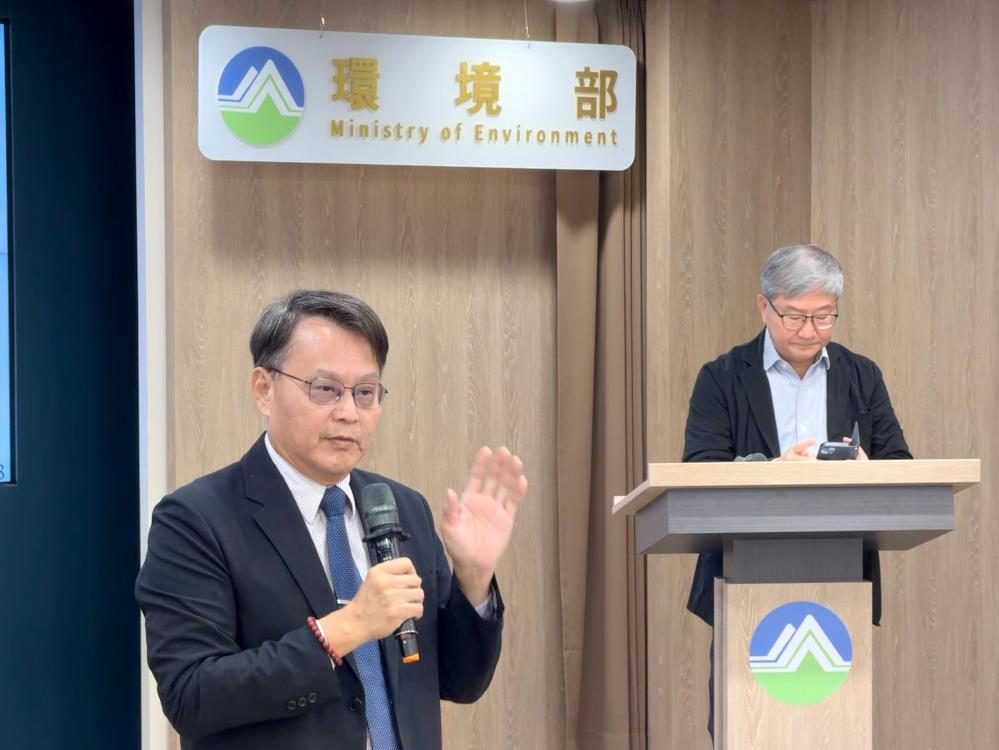
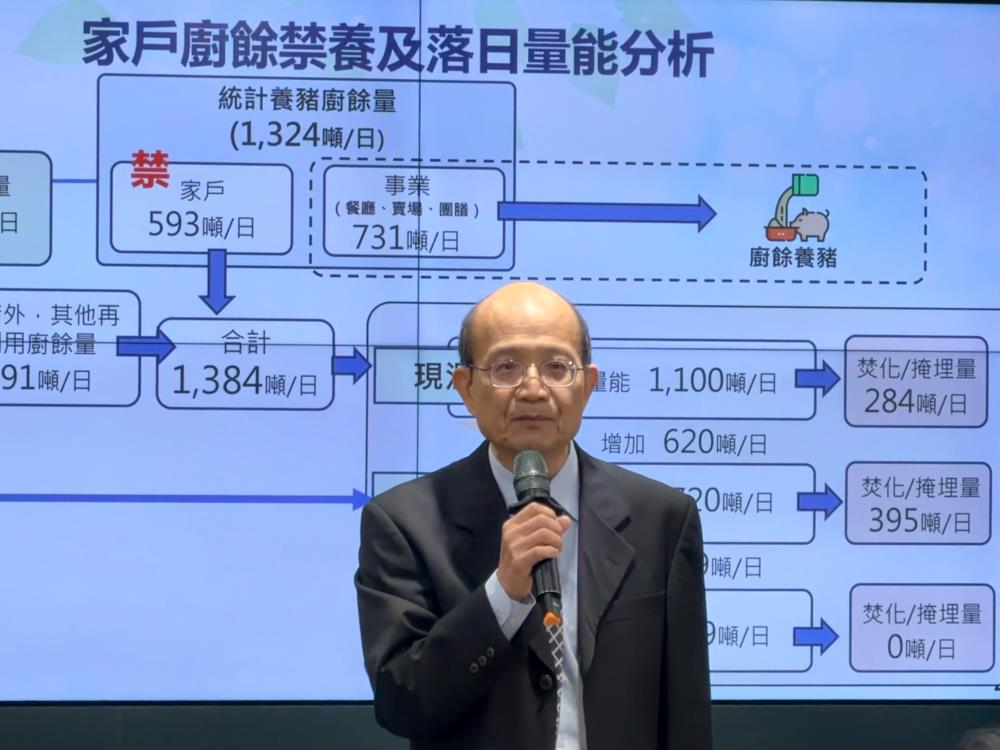
Share to Line Share to Facebook Share to X Print ContentAs Taiwan transitions its food waste to pig feeding policy, the Ministry of Environment (MOENV) has launched four strategic pillars: real-time monitoring at pig farms, stringent incineration controls, expanded reuse capacity, and nationwide food-saving education. These measures are intended to strengthen management of food waste reuse and disposal planning, ensure a seamless transition toward a circular economy while safeguarding national bio-security. The ministry will assist local governments through rigorous control mechanisms and technological tools to ensure that during the transition period, the use of business-generated food waste and other compliant food waste for pig feeding can meet the regulatory requirements, that steaming requirements are strictly implemented to eliminate the threat of swine fever viruses. Meanwhile, the construction of food waste reuse facilities will be accelerated to ensure proper disposal of food waste after a future comprehensive ban on pig feeding with food waste, achieving a win-win outcome for epidemic prevention and environmental protection.
To guarantee the elimination of swine fever viruses, the MOENV, in collaboration with the Ministry of Agriculture (MOA), mandates strict high-temperature steaming protocols.
1.Real-time oversight: by the end of 2025, all food-waste pig farms must install real-time temperature and video monitoring systems.
2.Traceability: all transport vehicles must be equipped with GPS devices to track collection flows and ensure processing integrity.
The MOENV is accelerating the construction of diverse reuse facilities, including:
1.Composting and black soldier fly processing.
2.Bioenergy plants and organic waste co-digestion systems.
3.Optimizing existing facilities to maximize resource recovery.
During the transition period, the MOENV maintains high environmental standards for food waste handled via incineration:
1.Dioxin monitoring: all 25 active incinerators (63 emission stacks) are subject to strict oversight.
2.Proven results: recent tests across 27 stacks show dioxin concentrations ranging from 0.003–0.019 ng-TEQ/Nm³—significantly lower than the national regulatory limit of 0.1 ng-TEQ/Nm³.
In partnership with the Ministry of Education and MOA, the MOENV is embedding "food-cherishing" concepts into schools and daily life. Through education and outreach, the public will be guided to cherish food, reduce unnecessary waste, fundamentally lower the amount of food waste generated. By promoting low-carbon local diets and agri-food education, aim to reduce waste at the source and lower Taiwan’s carbon footprint.
The MOENV emphasizes that shifting the food waste to pig feeding policy marks a pivotal milestone in Taiwan’s journey toward a circular economy. By partnering with local governments to optimize disposal systems, also invite every citizen to cherish resources and reduce waste generation. All of us can instill these sustainable habits in the next generation, ensuring a zero-waste future for all.
- Source:
- Ministry of Environment
- Published:
- 2025-12-05
- Updated:
- 2026-03-10
